We are excited to announce that we are joining the Sustainable Engineering Alliance!
The Sustainable Engineering Alliance is dedicated to reducing the environmental impact of manufactured products by promoting best practices in sustainable engineering. This approach is very much aligned with Solsta’s commitment to responsible electronics lifecycle management, combining component expertise, advanced obsolescence strategies and a strong focus on extending product life.
As a member of the alliance, we support responsible OEMs on their journey to reduce the environmental impact of the products they design, manufacture and support. The alliance aims to connect responsible OEMs with suppliers of sustainable technologies, products, materials, processes and services.
Look out for guidance and insights in the coming months as we work with the alliance to help you overcome sustainability challenges and create high-performance, eco-friendly products while staying compliant and competitive in a rapidly evolving market.
Contact Solsta to discuss your sustainability challenges and requirements in more detail.
It is with great sadness that we share the news that Gary Marsh, our CEO, has sadly passed away after a short illness. Having been a part of the business for nearly 40 years, Gary was a leader and friend to many of us within the Solid State family.
Gary was a very approachable and friendly person, and undertook his role with huge dedication, humour, and always with a smile. To many of us, he was not just our CEO, but also a highly respected colleague and friend. We are grateful for the incomparable legacy he leaves.
His commitment to Solid State was total and he oversaw exceptional growth and geographical business expansion, but always with the best interests of his employees at heart. He has been a constant inspiration to us all and will be sadly missed.
Our thoughts and deepest condolences go out to his family and loved ones during this very difficult time.
John Macmichael, Managing Director of Solsta, will stand in as Interim CEO, with the support of the Board of Directors and senior management team, to ensure continuity and stability across the Group.
Solsta today announces an exclusive distribution partnership with Wain Electrical, a leading manufacturer of standard and custom industrial connector solutions.
The exclusive deal covers the UK and Ireland and will enable Solsta to fulfil a more complete range of customer connectivity needs.
Wain industrial connectors are designed to meet the needs of applications ranging from PCB data connections to comprehensive large-scale equipment systems. The company’s expertise is finely tuned to meet technical demands covering data transmission rates, electromagnetic interference, sealing and resistance to chemical corrosion. Wain’s products offer durability against wear and extreme temperature fluctuations, pressure and vibration.
Martin Ion, Business Manager – Interconnectivity and E-Mech at Solsta, comments: “We are thrilled to bring this new connectivity and solutions franchise to the Solsta table. The Wain brand has a proven track record of huge success and aligns perfectly with today’s market needs, particularly when it comes to rectangular connectors and cable assemblies. Wain’s extensive product range is compatible with other leading industrial connector brands and we can help customers cross refer part numbers; Wain’s delivery performance is excellent.”
Solsta’s technical team can advise customers and help to specify both standard and custom solutions for connector requirements and cable assemblies. Wain provides an extensive range of connector inserts, contacts, housings and hoods, cable glands and harnesses; bandoliered products are also available.
The latest issue of Procurement Pro magazine contains our article “How Defence Tech Faces The Obsolescence Challenge” by Paul Dale and Tom Freeman. The piece looks at how procurement teams must balance immediate cost constraints against long-term operational demands when managing the obsolescence of critical components. Read it below or here in the online magazine.
While defence programmes endure for decades, the electronic components at their core can become obsolete in a much shorter period of time. This mismatch creates mounting pressure for procurement teams who must balance immediate cost constraints against long-term operational demands. When critical components reach end-of-life mid-programme, the fallout affects budgets, schedules and mission readiness.
When components reach end of life
Procurement professionals facing obsolescence have three options. They can source remaining stock through distributors and brokers – effective while supplies last, but this approach will often come at a premium.
Secondly, they can redesign affected systems and navigate requalification, which demands extensive testing and regulatory approval and may not fix the problem in the long term.
The third option proves most effective: planning for obsolescence before crisis strikes. Early lifecycle planning secures long-term component availability, enables favourable supplier negotiations and builds contingencies into programme schedules. Working with suppliers who maintain strong obsolescence policies becomes critical as they provide advanced discontinuation warnings and alternative sourcing strategies.
The requalification problem
Defence systems require rigorous qualification processes that turn minor component swaps into major programme headaches. Replacing a single capacitor with an identical alternative can trigger months of testing and validation.
Take an aerospace programme, for example. One obsolete timing circuit, originally worth just a few pounds, could force a delay of months or in some cases years while engineers source, test and qualify a replacement. Total costs, including programme delays, additional testing and lost production capacity, can potentially exceed £millions.
This qualification burden makes commercial components particularly risky despite attractive initial pricing.
Commercial speed versus military endurance
Commercial electronics follow market-driven cycles that prioritise rapid innovation over long-term support. These components often deliver excellent performance at competitive prices, but manufacturers typically discontinue products within three to five years.
Military-grade alternatives take a different approach.
Tom Freeman, franchise manager for VPT at Solsta, knows first-hand how committed VPT are to supporting high-reliability customers. VPT vertically integrate much of the manufacturing process, giving them full control over the supply chain for their products. This enables them to give long lifetime guarantees for continued production.
As Business Manager for Aerospace & Defence at Solsta, Paul Dale has also observed the extensive level of support that established defence suppliers like Excelitas offer their customers in the sector to avoid obsolescence issues.
Several of Solsta’s other high-reliability suppliers understand defence and aerospace programme requirements and offer specific long-term support for these programmes to maintain their longevity. These partners typically support products for ten to twenty years; they maintain detailed traceability records, comply with export regulations and provide advance notice of planned discontinuations.
If you choose the right manufacturer partners, while not eliminating the risk of being caught out by obsolescence issues, you can greatly reduce that risk.
Supply chain vulnerabilities
Modern electronics manufacturing concentrates in specific regions, creating geopolitical vulnerabilities. Taiwan dominates semiconductor production, Japan controls certain rare materials and China processes most rare earth elements. Each represents a potential choke point for defence programmes.
Recent export restrictions on dual-use technologies complicate international sourcing further. The rules around conflict minerals govern supply of critical raw materials including tantalum, cobalt and tungsten which face periodic supply constraints from mining regulations, political instability and environmental concerns.
Procurement teams must map complete supply chains, understanding not just immediate suppliers but the full pathway to raw materials. This transparency becomes essential for demonstrating export control compliance and avoiding inadvertent technology transfer. However, understanding these vulnerabilities is only the first step. Translating this knowledge into actionable procurement strategies requires a shift in how procurement professionals approach their role.
Procurement as strategic risk management
Rather than simply processing purchase orders, procurement teams must evolve into strategic risk managers who embed obsolescence planning throughout the programme lifecycle. Effective obsolescence management starts during initial design reviews, not simply when components fail. This means integrating lifecycle risk assessment into supplier evaluations, weighing long-term support commitments alongside traditional factors like price and performance.
Building relationships with specialist distributors who understand defence requirements proves particularly valuable. These partners often maintain strategic stock of critical components and provide market intelligence about impending obsolescence announcements. They can also effectively manage the regulatory complexity that adds another layer of challenge, with ITAR restrictions and potential sanctions affecting component availability across different parts of the world.
Building resilience
Several practical strategies reduce obsolescence risk without compromising programme objectives. Conducting formal lifecycle analysis during design phases identifies vulnerable components before they become critical. Securing additional stock during initial procurement provides insurance against future shortages for irreplaceable parts.
Military off-the-shelf solutions often offer better long-term viability than bespoke designs while avoiding unnecessary export control complications. Diversifying suppliers across different regions reduces concentration risk, though this must balance against managing multiple relationships.
Strong partnerships with manufacturers and specialist distributors create early warning systems for obsolescence issues, enabling proactive responses rather than reactive scrambles.
The forward view
Obsolescence challenges are inevitable in long-term defence programmes, but smart planning minimises their impact. By treating component lifecycle as a core design parameter, procurement professionals protect programme timelines, budgets and operational capability.
The most successful defence programmes integrate obsolescence planning from day one, recognising that today’s procurement decisions determine tomorrow’s sustainment costs. As systems grow more sophisticated and programme lifecycles extend, this forward-thinking approach becomes essential for mission success.
Derek Stewart’s article SoMs and sustainability: designing for long life in a disposable age explores the challenges of ensuring products feature the latest technology while protecting longevity and reliability, and shows how the use of System-on-modules (SoMs) can offer a solution.
The electronics industry faces a paradox. Consumer culture demands ever-faster product refresh cycles, yet industrial and commercial sectors need equipment that operates and can be maintained reliably for decades. Meanwhile, sustainability targets and supply chain volatility add pressure to extend product lifecycles wherever possible.
Many components like memory and processors are driven by the fast-paced consumer market, where greater performance and ever-lower pricing are demanded.
This creates real headaches for engineers working on professional equipment where these types of components are still required. Design a system too conservatively, using mature, tried and tested components, and you risk obsolescence before launch. Build with cutting-edge components and you may struggle with availability five years down the line if they are not well received by the market.
System-on-modules (SoMs) offer a different path. By integrating core processing functions onto standardised, swappable modules, SoMs separate a design’s stable elements from those that need regular updating.
Real-world staying power
The medical sector clearly demonstrates this principle. A dental chair or MRI scanner represents a significant investment, with buyers expecting many years of reliable operation plus ongoing availability of spare parts. These systems can’t follow smartphone replacement cycles. When a component becomes obsolete, you need options beyond “buy a new machine.”
Similarly, the EV-charging infrastructure rollout demands both rapid deployment and long-term reliability. Charge point operators can’t afford to rip out and replace entire installations every few years as technology evolves. They need modular systems that can adapt and upgrade without wholesale replacement.
Industrial automation faces identical challenges. Factory equipment must deliver return on investment over decades, not quarters. When a control system needs updating for new protocols or processing power, modularity beats starting from scratch.
Waste reduction through design
SoMs address waste at multiple levels. Rather than sourcing hundreds of discrete components individually, engineers receive a single, tested module containing what could otherwise be 200-400 separate parts. This consolidation significantly reduces packaging and shipping waste.
More importantly, when technology updates arrive, only the module needs changing. The carrier board, enclosure and other elements remain untouched. Compare this to traditional designs where component obsolescence often triggers complete redesigns, scrapping existing tooling and inventory.
The economics work too. SoMs suppliers maintain much larger volumes than individual product manufacturers, providing better component availability and obsolescence management. When a part does reach end-of-life, reputable suppliers should offer drop-in replacements with identical form factors, avoiding the time and cost consuming changes that plague discrete designs.
Standardisation as a strategy
Rather than each manufacturer burning time and resources on regulatory approval, pre-certified SoMs arrive with existing certifications that can often be transferred to the final product. This accelerates time to market while reducing the duplicated effort and cost across multiple companies developing similar systems.
A well-designed SoM family offers multiple performance levels within identical physical footprints. Customers can generally specify different processing powers, memory configurations and wireless comms options without changing their carrier board designs, supporting product variants and future upgrades without redesign costs.
Incremental updates become possible through this same approach. For example, existing designs can accommodate neural processing units as AI becomes standard, requiring only module swaps rather than complete overhauls.
The shift in thinking
Adoption is spreading beyond traditional SoM markets because, for example, companies producing more than 20,000 units a year are now choosing modules instead of in-house designs, having recognised the hidden costs of developing and maintaining discrete components. The pandemic highlighted supply chain vulnerabilities, while rising design complexity makes self-reliant approaches increasingly expensive.
Rather than viewing SoMs as expensive compared to raw component costs, manufacturers have begun factoring in development time, supply chain management, obsolescence risk and opportunity costs. Internal engineering teams can now focus on differentiating features instead of recreating standard processing architectures.
When security vulnerabilities emerge, SoM-based systems often accommodate incremental firmware updates rather than requiring rebuilt software stacks. This provides a method of keeping products current without the expense and risk of wholesale redesigns.
Beyond throwaway culture
While consumer markets chase ever-shorter replacement cycles, professional and industrial applications demand the opposite. Equipment buyers want systems that remain viable for decades, with clear upgrade paths and guaranteed availability of spare parts.
By planning product lifecycles spanning ten years or more, module suppliers naturally align with these requirements and can offer the longevity guarantees required by non-consumer markets. They manage the complexity of component sourcing, obsolescence planning and technology transitions, allowing equipment manufacturers to focus on their core expertise rather than wrestling with supply chain headaches.
What emerges is more sustainable product development. Systems evolve through selective module updates instead of complete redesigns every few years. With sustainability targets tightening and supply chains remaining volatile, this modular approach offers practical benefits beyond environmental credentials.
In an industry often focused on the next big thing, sometimes the smartest move is building systems designed to last.
Derek Stewart is a Business Development Engineer at Solsta
Chris Waldron’s article in September’s issue of Electronic Sourcing – Navigating supply chain challenges and rising costs – examines how procurement teams can avoid pitfalls and reduce risks by choosing their supply chain partners strategically. When buyers face long lead times and volatile pricing, Chris advises discipline, buffer stocks and open communication with supplier partners who work proactively with their customers.
The semiconductor market remains challenging for procurement teams. After years of supply chain disruptions, many hoped we’d see a return to normalcy by now. Instead, we’re dealing with extended lead times, volatile pricing and suppliers who sometimes promise the moon but deliver very little.
The key isn’t to panic or chase every lead. It’s to build a strategy that acknowledges today’s market reality whilst protecting your business from unnecessary risk.
The pricing picture isn’t much rosier. Recent geopolitical tariffs are raising chip prices, forcing OEMs to reallocate spending and restructure supply relationships. What makes this particularly frustrating is suppliers who continue quoting unrealistic lead times. Procurement professionals hear “8-10 weeks” only to have that stretch to 6 months.
Building buffer stock without breaking the bank
When facing long lead times, the temptation is ordering everything you might need. That’s expensive and risky as you might end up with a surplus of stock you don’t need and can’t store. Instead, focus on buffer stock for your most critical components.
Start by identifying which semiconductors are truly irreplaceable in your design. These are your priority items for buffer stock. For everything else, work with your engineering and supplier team to identify suitable alternatives beforehand.
Maintain a buffer stock level that works with your production volumes and cash flow. Your distribution partner can provide valuable guidance on optimal stock levels and help you refine this strategy based on your specific needs and market conditions.
The art of early ordering
Forward planning has become essential, but it demands discipline. The key is balancing inventory costs against the risk of production delays, which requires honest conversations with your sales team about demand forecasts.
Many companies get burned by ordering too early based on optimistic projections, while others miss market opportunities by waiting too long to place orders. The sweet spot typically involves ordering 3-4 months ahead of immediate needs, though this varies significantly by component type. High-value items like processors often warrant shorter lead times to minimise capital exposure, while lower-cost but critical components may justify longer ordering times to ensure availability.
Choosing the right partners
The semiconductor market has separated the wheat from the chaff regarding suppliers. Those worth working with tell you the truth, even when it’s not what you want to hear, and communicate regularly. They warn about potential delays, suggest alternatives and help you plan around constraints upfront.
Look for suppliers who have qualified alternative components rather than offering to “look into it” when your preferred part becomes unavailable. Also seek ERAI (Electronic Resellers Association International) members. This membership demonstrates commitment to preventing counterfeit components entering the supply chain.
Alternative components: your insurance policy
Having pre-qualified alternatives is essential – but this must happen before you’re desperate, not after your primary supplier has let you down.
The best suppliers understand this reality and maintain pre-qualified alternative databases. They communicate openly about substitute options and work proactively with your engineering team, identifying drop-in replacements for key components. When supply disruptions hit, these partners pivot quickly without leaving you scrambling.
Communication remains the cornerstone of successful alternative component strategies. Your supplier should update you regularly on market conditions and potential substitutes, not wait for you to ask.
Managing expectations internally
One of the biggest challenges is managing expectations within your organisation. Sales teams want quick delivery promises, finance wants minimised inventory costs and engineering prefers proven components.
Your job is to be the voice of reality in these discussions. Use data showing the true cost of component shortages versus holding buffer stock to make semiconductor sourcing a strategic advantage rather than constant firefighting for buyers.
Thriving in uncertain times
The semiconductor market won’t return to predictable patterns anytime soon. New technologies, geopolitical tensions and changing demand patterns mean volatility is here to stay.
Success requires careful planning, strong supplier relationships and realistic expectations. Stay flexible and communicate across the supply chain whilst maintaining discipline. Most importantly, work with suppliers who understand that your success depends on their honesty, not optimism.
The September issue of Components in Electronics magazine features an article by Geoff North entitled “The electronic engineering driving the future of medical imaging”, in which Geoff explores how the technology has progressed from delivering static images to today’s advanced systems responding with high precision in real time to deliver life saving solutions.
Picture a surgeon performing delicate brain surgery, relying on real-time imaging that must never falter. Or an emergency responder using portable ultrasound in a remote village where the nearest hospital is hours away. These scenarios represent the new reality of medical imaging, where electronic engineers quietly work to solve problems that didn’t exist when imaging systems lived safely in hospital basements.
The engineering challenges are unlike anything in consumer electronics. How do you design systems that combine the precision of laboratory equipment with the portability of a smartphone, all while meeting medical safety standards that leave no room for error?
The answer lies in a convergence of breakthrough technologies that are reshaping the very foundations of medical imaging.
Seeing the invisible
New sensor designs are pushing imaging into previously inaccessible spectral ranges. For instance, shortwave infrared operates between 900 and 1,700 nanometres, where tissue absorbs less light and scatters more. As a result, biological structures once difficult to image become clearly visible.
The commercial landscape has also shifted dramatically in recent years. Three years ago, indium gallium arsenide (InGaAs) cameras were expensive and had limited performance. However, major manufacturers entering the market like Sony drove competition and improved quality. Consequently, high-performance infrared imaging is now viable for clinical integration.
Additionally, multispectral sensors capture RGB alongside near-infrared wavelengths on the same device. Near-infrared penetrates deeper into tissue, making it particularly effective for detecting cancerous cells. Modern hyperspectral systems can now analyse 20-30 different colour channels, allowing clinicians to examine tissue layers at varying depths by adjusting light frequencies.
Three-dimensional imaging offers significant diagnostic advantages over traditional methods. For example, surgeons can assess complete tumour spatial extension rather than relying on thin slice analysis. Nevertheless, implementation challenges remain, including precise camera synchronisation for simultaneous exposure and correction of manufacturing variations across lens mounting. These issues must be carefully resolved throughout the production process to ensure reliable performance.
Intelligence at the point of care
Processing medical imaging data at device level reduces latency and supports real-time clinical workflows. Edge AI enables automatic image analysis during procedures, with algorithms identifying anatomical features that human observers might miss. This capability allows for different aspects of anatomy to be highlighted during live procedures.
Moreover, edge processing positions computational power near medical equipment rather than within devices themselves. This approach makes automatic interpretations for rapid diagnoses possible whilst maintaining processing power for complex AI algorithms.
Additionally, data transmission requirements decrease whilst response times improve for time-sensitive medical applications.
Surgical precision demands higher frame rates to maintain optimal performance. Modern endoscopic systems can now capture 60 frames per second, effectively doubling the previous 15-30 fps standard. This improvement provides smoother imagery that maintains clarity as surgeons navigate through tissue. Importantly, system latency from event occurrence to visual display cannot exceed 150 milliseconds, as beyond that threshold, hand-eye coordination suffers significantly.
Digital staining represents a significant AI-driven advancement in the field. Computational processing generates digital staining effects without physical sample modification, delivering results faster than traditional staining methods. When properly trained, AI systems provide more consistent visualisation than manual processes as well as eliminating the time and chemical requirements of conventional techniques.
Sensor efficiency begins at the component level and significantly influences overall system performance. Photon-counting cameras achieve readout noise values below 0.3 electrons, which substantially reduces power consumption without compromising imaging performance. This efficiency becomes critical when addressing the thermal constraints of medical devices.
Keeping cool under pressure
Heat kills more medical imaging projects than any other single factor. When devices operate within millimetres of human tissue, surface temperatures exceeding 50°C can cause burns, making thermal management a life-safety issue rather than merely a performance consideration. Engineers must balance this constraint against the relentless demand for higher resolution sensors, faster frame rates and real-time AI processing.
The mathematics are unforgiving. A 4K sensor running at 60 fps generates exponentially more heat than its 1080p predecessor, while machine-learning algorithms demand continuous computation cycles that can overwhelm even sophisticated cooling systems.
Advanced processing tasks may run for hours during complex surgical procedures, creating sustained thermal loads that push conventional cooling approaches to their limits.
Modern solutions read like science fiction: image sensors enclosed in hermetically sealed chambers filled with dry nitrogen or argon gases that conduct heat more efficiently than air while preventing moisture damage. Adaptive power management systems monitor usage patterns in real-time, automatically scaling processor frequencies during standby periods and ramping up performance only when imaging demands require it.
The stakes continue to rise with the emergence of therapeutic imaging, where devices are required to capture high-resolution images and deliver focused treatment energy in tandem. These systems pose a significant thermal challenge, demanding that engineers dissipate heat generated by both the imaging sensors and the therapeutic energy sources within a single compact device.
The mobile revolution
The demands on modern medical imaging extend far beyond power constraints. Systems must now deliver hospital-grade performance in diverse environments, from rural clinics to emergency response vehicles, without sacrificing diagnostic accuracy or regulatory compliance.
Healthcare delivery transformed dramatically during the COVID-19 pandemic, when portable imaging devices proved essential for patient care in isolation wards, care homes and makeshift treatment facilities. This shift revealed the true potential of mobile diagnostic technology. Portable ultrasound systems, handheld X-ray devices and compact MRI units now bring sophisticated imaging capabilities directly to patients who might otherwise struggle to access centralised facilities.
The real game-changer lies in instantaneous data transmission. Modern imaging systems capture, process and transmit diagnostic images to Picture Archiving and Communication System (PACS) servers within seconds of acquisition. Radiologists can review emergency scans from remote locations, enabling critical diagnoses while ambulances are still en route to hospitals. This connectivity reshapes how quickly medical decisions can be made.
Behind this seamless experience, however, sits complex infrastructure architecture. Data flows from imaging sensors through edge processing units, across hospital networks and into cloud-based analytics platforms where AI algorithms enhance image quality and flag potential abnormalities. Each component must maintain millisecond-level synchronisation and handle the massive bandwidth requirements of high-resolution medical imagery.
Security challenges multiply exponentially in distributed systems like this. Unlike isolated hospital equipment, portable devices connect across public networks, creating multiple attack vectors. Centralised security management becomes crucial, providing real-time monitoring and automated threat response capabilities that local device configurations cannot match.
The numbers tell the story: healthcare data grows at around 36% annually, with medical imaging representing the largest component of this explosion. Balancing this growth with stringent security requirements and preserving seamless clinical workflows represents one of the most complex engineering challenges in modern medical technology.
The next engineering frontier
Medical imaging has progressed far beyond its original role of capturing static images of the human body. Today’s advanced systems can deliver laser therapy and monitor tissue response in real time or guide high-intensity ultrasound treatments with a level of precision that would have seemed unimaginable only a few years ago.
This marks a new pinnacle in engineering: developing devices that can diagnose and treat concurrently, all while adhering to the rigorous safety standards demanded by medical environments.
The transformation of medical imaging continues to accelerate, powered by engineering innovation. At its core are electronic engineers, driven by the understanding that each technical breakthrough brings life-saving solutions closer to the patients who need them most.
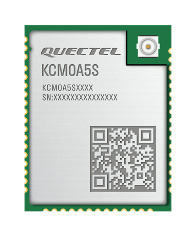
Quectel Wireless Solutions, a global IoT solutions provider, has launched the KCM0A5S high-performance Wi-SUN module with strong anti-interference capabilities and excellent signal penetration, designed for smart applications such as street lighting, industrial IoT, smart meters, smart cities and precision agriculture.
Based on the EFR32FG25 sub-GHz low power wireless System on Chip from Silicon Labs, and featuring an ARM Cortex-M33 processor with a frequency of up to 97.5MHz, the KCM0A5S module includes built-in 256KB RAM and 2MB Flash memory, ensuring efficient performance.
The KCM0A5S supports the Wi-SUN Field Area Network (FAN) 1.1 protocol and operates across the 470–928 MHz frequency range. The module utilizes IPv6-based wireless mesh networking technology, intrinsic to the Wi-SUN communication standard, to deliver long-range transmission, stable network connectivity and reliable data transmission. The KCM0A5S offers flexible deployment capabilities, supporting both router and leaf node configurations in standalone SoC mode, as well as acting as a border router when paired with a Linux host in RCP (Radio Co-Processor) mode.
The module’s versatility makes it an ideal solution for a wide range of mesh networking applications in smart city, utility and industrial IoT deployments. The KCM0A5S features strong anti-interference capabilities and delivers excellent signal penetration which is of specific value for use cases in hard-to-reach locations. With a minimum of ten years product lifecycle and cross-version compatibility, the solution ensures long-term interoperability within Wi-SUN FAN networks.
“We’re delighted to launch the Quectel KCM0A5S Wi-SUN module,” said Delbert Sun, Vice General Manager, Product Department, Quectel Wireless Solutions. “Wi-SUN is a versatile LPWA connectivity technology that is applicable globally to a wide range of use cases. Its security, scalability and robustness provide compelling advantages to developers and device designers and the KCM0A5S adds to this with its ultra-compact form factor, high speed bandwidth and low latency. We look forward to helping customers to build a smarter world with the KCM0A5S as they bring the latest Wi-SUN enabled devices to market.”
Flexibility for developers and designers is assured thanks to the KCM0A5S’s ultra-compact LCC form factor. Dimensions of 28.0mm x 22.0mm x 3.15mm enable the size and cost of end products to be optimized, allowing for maximized design options. The module is also ideal for industrial-grade use cases with an operating temperature range of -40 °C to +85 °C. The module is available in variants that support a peak transmit power of 30 dBm—currently permitted in select regions such as North America, Latin Ameria and some APAC countries —and offers both OFDM and FSK modulation schemes, subject to regional regulatory allowances.
Wi-SUN has been gaining traction for connecting IoT devices as a low power wide area (LPWA) connectivity solution because of its blend of scalability, security, interoperability and performance. It offers high speed bandwidth at up to 2.4Mbp with OFDM modulation. The technology is easily expandable and can support thousands of nodes. WI-SUN’s self-forming and self-healing mesh eliminates single point of failure networks and simplifies deployment.
The combination of wide coverage, long distance of several km and the ability to serve urban scenarios, covered by multi-hop mode, is seeing Wi-SUN adopted for smart metering and smart city applications. For example, a control management system for street lighting, utilities and parking has been deployed in London that utilizes 15,000 Wi-SUN devices and 12 Wi-SUN border routers to enable real-time remote management and provide a future-proof system that can scale up as the city transitions to new infrastructure.
Avalue Technology has introduced the EPI-ARLS, a compact EPIC SBC designed specifically for industrial and embedded applications. Combining small form factor, high-performance computing, rich I/O connectivity and versatile expansion, EPI-ARLS is tailored to meet the demanding requirements of edge computing, smart manufacturing, healthcare monitoring and precision agriculture.
Powered by Intel® Core™ Ultra processors based on the Intel® Arrow Lake-S architecture, the EPI-ARLS supports up to 35W TDP, delivering a powerful yet energy-efficient performance. The product is ideal for space-constrained environments requiring real-time data processing. With its compact 165 x 115 mm EPIC form factor and a single 262-pin SO-DIMM slot supporting up to 48GB DDR5 5600/6400MHz dual-channel memory, the EPI-ARLS ensures high-speed data analysis and AI inference while simplifying system integration and space optimization.
For expandability, the EPI-ARLS is equipped with one M.2 Key-E slot and two M.2 Key-M slots (the Q870 version exclusively supports dual Key-M), accommodating wireless modules, NVMe SSDs, and SATA devices. It also offers comprehensive I/O options, including up to three 2.5GbE LAN ports (three on the Q870, two on the H810), four USB 3.2, four USB 2.0, and four COM ports (2 x RS-232/422/485 + 2 x RS-232), as well as 1 x 16-bit GPIO and TPM 2.0 for secure and versatile industrial connectivity.
The EPI-ARLS supports triple display output via DP 2.0, HDMI 2.0, and LVDS/eDP interfaces, with resolutions up to 8K—making it a robust platform for industrial imaging, multi-screen control, and visual edge applications.
The EPI-ARLS suits versatile applications including: • Smart Agriculture: Integrates sensor data, vision analysis, and device control to enable precision farming and remote operations. • Healthcare Monitoring: Supports real-time processing and integration of multiple physiological signals, improving patient care quality and clinical efficiency. • Edge Computing: Enables localized data processing and analysis to reduce latency and offload network traffic, ideal for transportation, logistics, and retail environments. • Industrial Automation: Integrates with PLCs, sensors, and control systems via high-speed I/O and multiple communication interfaces to ensure stable and reliable process control.
When compared to Mini-ITX platforms (170mm x 170mm), the EPI-ARLS’s EPIC form factor (165mm x 115mm) offers both space-saving design and sufficient expandability, making it well-suited for integration into size-sensitive, high-performance systems such as robotic arms, high-speed imaging modules and laser cutting devices. Available in both Q870 and H810 chipset versions, the Q870 variant emphasizes comprehensive I/O and triple LAN support for highly integrated systems, while the H810 targets cost-efficiency and streamlined architectures for large-scale deployments and long-life cycle product planning. With modular design and flexible configuration, the EPI-ARLS expands the deployment depth and application breadth of EPIC SBCs in the smart edge landscape.
Main Features of EPI-ARLS:
Top Layer Soldered Socket
Intel® Core™ Ultra Processors supports LGA 1851 CPU Up to 35W Max
Intel® Q870/H810 chipsets
Single DDR5 6400MHz SO-DIMM socket, support up to 48GB
Triple Display: 1 x DP, 1 x HDMI, 1 x 2CH LVDS or 1x eDP (Default LVDS)
New ultra-robust, high-power laser diodes deliver enhanced beam quality, efficiency and reliability for LiDAR and ToF applications.
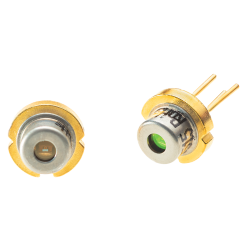
Excelitas®, the leading provider of advanced, life-enriching technologies that make a difference, serving global market leaders in the life sciences, advanced industrial, next-generation semiconductor and avionics sectors, announces the launch of its next-generation 905 nm TPG3 Series of Triple-Cavity Pulsed Laser Diodes in a TO-56 can. Designed for high-volume range finding and LiDAR systems, the new series delivers improved beam uniformity, higher reliability, and tailored performance options for diverse short- to long-range applications.
All four of the new diodes feature Excelitas’ triple-cavity architecture, offering consistent optical output, low voltage requirements, improved conversion efficiency, and rugged TO-can packaging for high-reliability use in harsh environments. The series spans a range of power outputs and emission areas to meet specific system needs:
TPG3AU1S1.5 (16 W / 6 A, 40×10 μm) – Ultra-compact, energy-efficient diode ideal for short-range Time-of-Flight, 3D sensing, and portable LiDAR systems requiring tight beam collimation and low thermal load.
TPG3AU1S03 (38 W / 13 A, 75×10 μm) – Mid-power option balancing output power and size, suited for industrial mid- to long-range ToF sensing and mobile mapping systems.
TPG3AU1S04 (54 W / 18 A, 100×10 μm) – High-efficiency diode with a moderate aperture, optimized for extended-range LiDAR and continuous-use sensing where thermal stability is critical.
TPG3AU1S09 (120 W / 40 A, 225×10 μm) – High-power solution for long-range industrial and automotive LiDAR, outdoor scanning, and mapping platforms requiring maximum reach and optical density.
“As demand grows for greater performance and reliability in LiDAR and sensing systems, we continue advancing our laser diode technology to meet it,” said Jens Krause, Program Manager at Excelitas. “This next-generation lineup gives customers more flexibility to optimize power, range and optical footprint for their unique application needs.