Solid State Supplies IoT Framework Proves Success

At Solid State Supplies, our team always strives to deliver a very high level of service excellence to both our customers and suppliers alike. Following the explosion in demand for the Internet of Things (IoT), we have developed a new strategy to provide customers with an end-to-end IoT solution. Forming new partnerships and strengthening existing relationships with leading IoT experts, we are able to offer both hardware and software IoT solutions to enable customers to deploy and return their maximum IoT potential. 


As part of this new IoT strategy, we have utilised the ‘Solid State Supplies 5 Stage IoT Framework’:

  1. Thing
  2. Connect
  3. Collect
  4. Learn
  5. Do

In January 2020 this was recognised by Robustel, as we received their award for ‘Outstanding Growth for the Year 2019’. Robustel has become a highly effective cornerstone for the ‘Connect’ element of our IoT Framework. The award was presented by David Evans, Robustel Country Manager UK and Ireland, at Solid State Supplies’ head office in Redditch, UK.


“Solid State Supplies have achieved remarkable growth, despite financial uncertainty of Brexit. Their sales team have been quick to grasp the “how-to-use” points and the innovation available from the Robustel product line.”


Success has been derived from a number of different applications including, a significant win with a high street Retail chain for a large roll out of 4G routers, an automatic number plate recognition camera manufacturer, and an industrial automation giant in the Food and Beverage industry. Continued success will be driven from the strong pipeline for 2020 and beyond, led by our IoT Technology Director, Scott A Brenton.

If you would like to find out what IoT can mean for your business, please use the contact form below to get in touch.


    IoT & Food Waste Management: REAMIT 2020

    It was reported in 2018 that approximately 10 million tonnes of food is either lost or wasted annually. Other than the obvious loss in revenue from agricultural and food production companies, wasting food also causes considerable problems on the environment.


    With the ongoing development of technologies, connecting ‘smart’ sensors can help reduce food waste through:

    • Food safety monitoring
    • Freshness monitoring
    • Food spoilage monitoring

    For example, minor temperature variances of just a few degrees can decrease shelf life of perishable goods, such as a bag of salad losing several days, so it is vital to monitor the temperature of their environment frequently and precisely to prevent food from being wasted. Traditionally, this would be done with the temperature being taken manually with a thermometer and logged by pen or entered onto a computer. This can be a time-consuming processes.


    However, with developing technology solutions (such as Digi), hardware, wireless sensors, gateways and cloud applications can be installed to automate this process so that temperature readings happened more regularly, consistently and accurately.


    This can be used as an automated reporting tool to help companies comply with food safety regulations and allowing data to be viewed in real-time, and receive alerts via emails and SMS messages. It can also be used in applications such as monitoring and controlling temperature to prevent under/over-chilling products to preserve their shelf life for longer.


    REAMIT 9/1/2020: Improving Resource Efficiency of Agribusiness supply chains by Minimizing waste using Big data and IoT sensors

    Nottingham Trent University have organised the REAMIT symposium on 9th Jan 2020 focusing on minimising food waste in agribusiness supply chains, across North West Europe. This Symposium is aimed at Agribusiness stakeholders, IoT practitioners, Academics and those from the Agri-food supply chains and is organised as part of the large European project (www.reamit.eu) funded by the Interreg NWE programme. Admission for this event is free.


    In short, IoT technology can be implemented into any stage of the food supply chain of your current infrastructure network – come visit our stand to see what options are available for you to explore to help benefit your business.

    Your Wireless Network: A Framework for Remote Management – Digi XBee3

    The use of wireless technologies has proliferated into numerous applications from toys, home automation, smart street lighting, industrial automation and mobile communications. In the era of the Internet of Things (IoT), the demand for smart sensors and end equipment to provide further data for intelligence is on the increase. From monitoring how much energy you are using to monitoring industrial machines, the information gathered can provide a better understanding on the way assets can be better deployed, improving efficiencies, which in the long run will lower running costs. Also, should critical operating parameter fall outside the normal operating conditions, preventative maintenance can lead to a reduced down time.

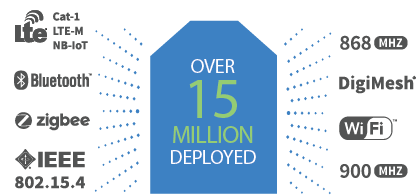
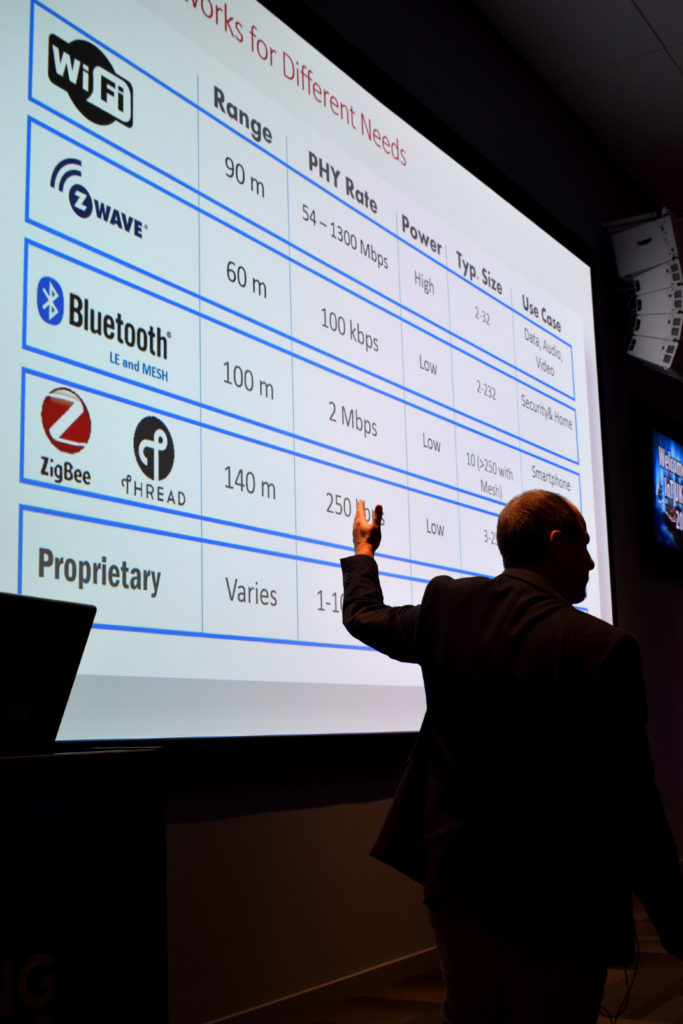
    When designing a new application (depending on the design parameters, e.g. data rate, range, battery life, etc.), there are a number of wireless technologies designed to fulfil those requirements such as Wi-Fi, Bluetooth, Zigbee, IEEE802.15.4, LTE CAT-1, NB-IoT and subGHz ISM bands.

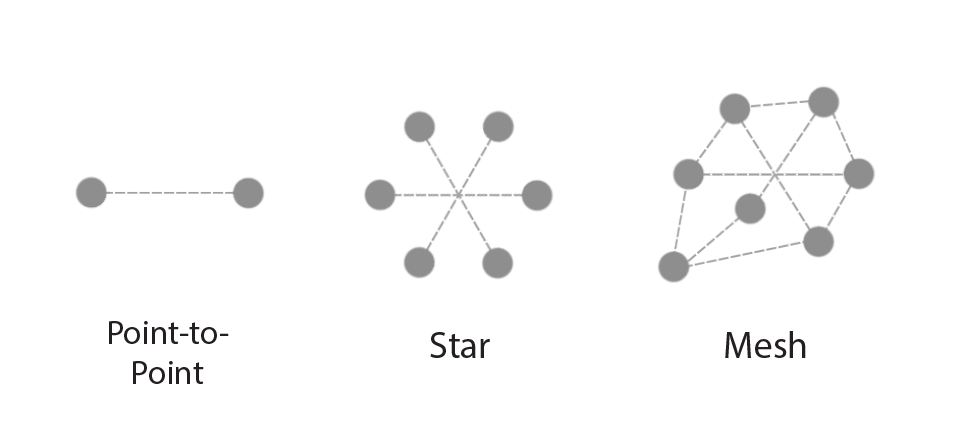
    Often, most wireless module manufacturers provide solutions as discrete components or in the form of pre-certified modules. However, usually the form factor of the devices for each different protocol is different and not usually pin compatible, so before committing to a new PCB design, the type of wireless technology needs to be chosen very carefully depending on the range, data rate, topology of the wireless network e.g. Point-to-Point (P2P), Star or Mesh.


    The next step for Design Engineers is to look at the capability for cloud connectivity. If capable, does the link need to be secure and how do you implement this? For a Design Engineer, this is a lot to think about. How do you get the device data from the end nodes up into the cloud? This article describes what Digi International offers around its XBee3® technology to help customers connect to the cloud.


    About the XBee3®

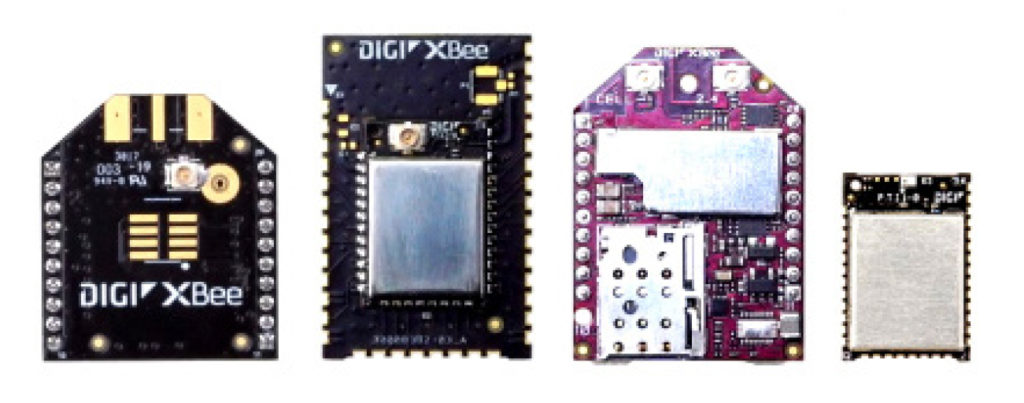
    To help customers get a head start with their new XBee3® technology, Digi has designed the XBee3® with multiple protocols in Zigbee, 802.15.4 and their own proprietary meshing protocol, called Digimesh, which is much leaner than the Zigbee standard and well-suited to a battery-powered network. There are also variants for NB-IoT, LTE CAT-1. The advantage of this is that there’s a common form factor on either SMT or THT devices, so the same PCB footprint can be used for all the different Digi protocols.

    Development Tools

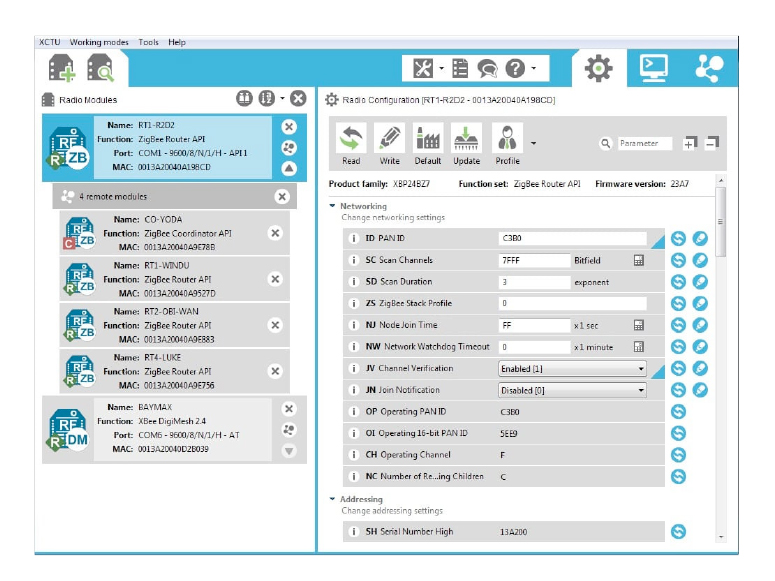
    To enable designers to configure, evaluate and optimise an XBee3 communications network, Digi provides robust tools such as the XCTU (XBee Configuration Tool Utility).

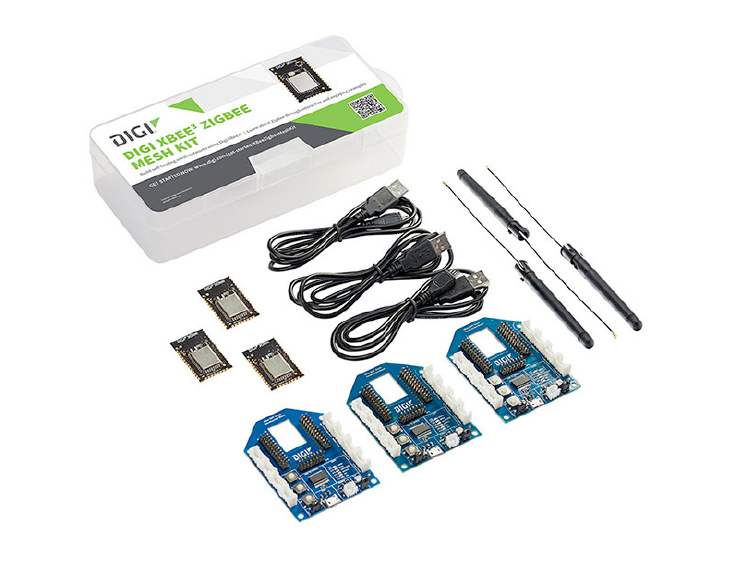
    Using the XBee3® development kits, designers can readily attach the XCTU to their XBee3® devices by the USB cable initially to configure, and then remotely, to start sending messages between devices and to perform range testing. A message framework function also enables designers to understand how the message frames are setup.

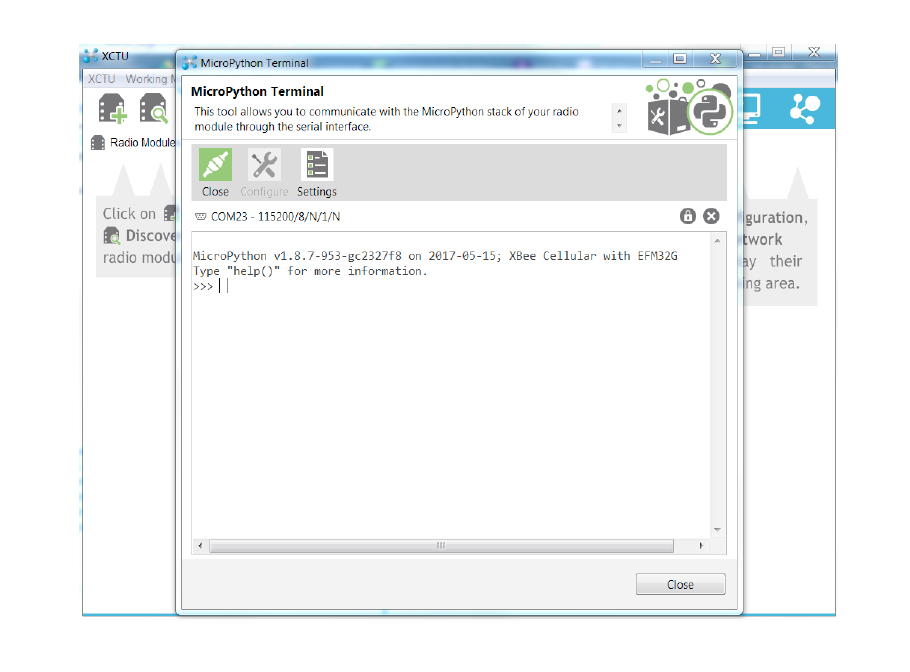
    New for the XBee3®, software development can be achieved with Micropython. 32KB flash and 32KB ram are available to enable the code to be programmed onto the XBee3 and run standalone. This is ideal if an additional micro is not required and can help keep the cost down and if the design is battery powered, battery life could be improved. To enable Micropython development, Digi provide the PyCharm toolset which includes XBee3® examples using the I2C, digit I/O, to help designers getting started.

    Connections to the Digi Remote Manager® (DRM)

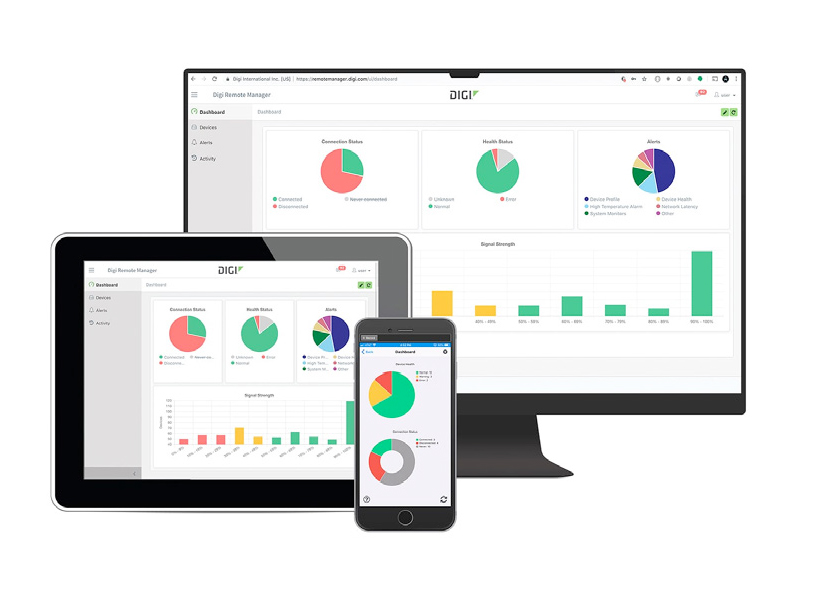
    For companies who do not have a cloud solution in place, trying to find different companies for software and hardware could be a challenge.  To overcome this, Digi International have put together an eco-system for all of their embedded products to enable customers a seamless design flow to get their design working and information up into the cloud. Digi Remote Manager® (DRM) enables customers to manage and control their embedded devices from a central, secure platform anywhere in the world. The status and location of edge-devices can be monitored and if required, firmware over the air updates can be achieved.

    DRM can then be integrated to cloud solutions such as Microsoft Azure, AWS or other customers choice of cloud systems.

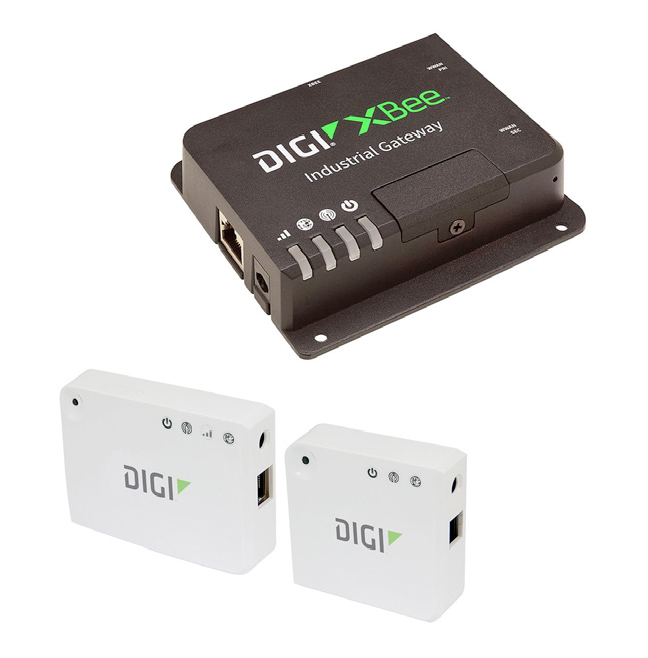
    To enable the Digi XBee3® to connect to DRM, Digi also offer XBee® gateways which can communicate to your local XBee® network as a concentrator and via Wi-Fi, ethernet or cellular connectivity (with fallback capability should one of these channels fail) to connect to the DRM. A programming API is available for DRM to enable companies to integrate this into their cloud application code.


    Security – Digi Trustfence®

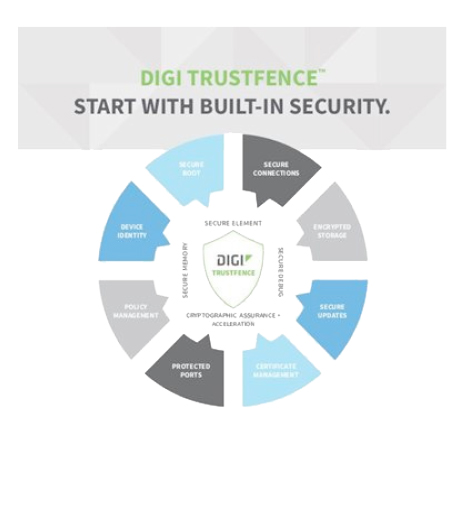
    Of course, anything which is potentially connected to the worldwide web will be a target for cyber criminals. Therefore, integrating security is of utmost importance in any design today. The Digi security platform called Trustfence® is built into every Digi product. It takes a layered approach and can grow and adapt according to your system. Trustfence® takes leading industry standards and relevant security certifications, i.e. HIPAA, FIPS140-2, and NIST. Compassing the Digi XBee3® end node device, up to through the gateway and into DRM, so even if you are not a cyber security expert, you can be sure Trustfence® can protect your design and deployment with confidence.


    Click here to speak to our of our experts and see how you can benefit from the Digi XBee ecosystem.

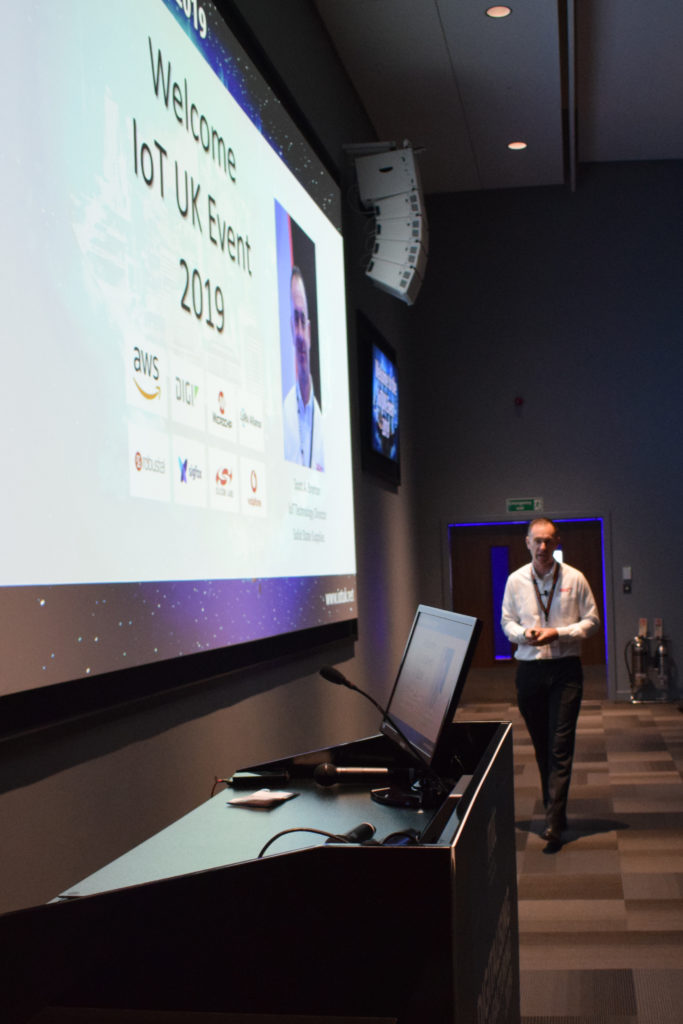
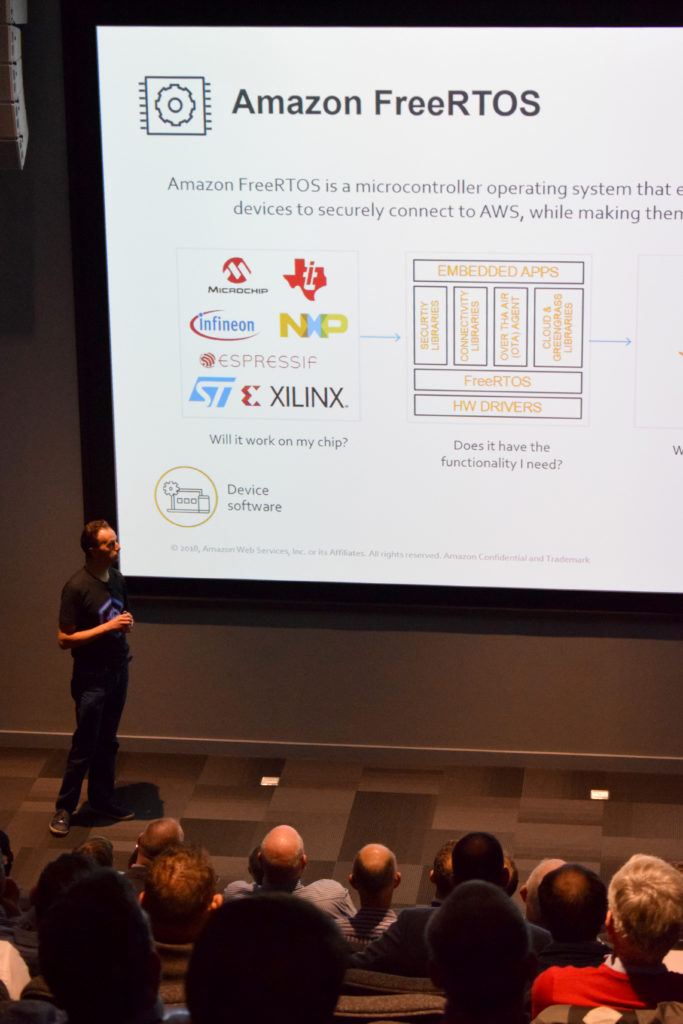
    The IoT UK Event 2019

    Solid State Supplies are proud sponsors of the IoT UK Event,
    held at the Advanced Manufacturing Technology Centre in
    Coventry on Wednesday 6th November 2019.


    Official full length video of the IoT UK Event 2019


    Official photos of the IoT UK Event 2019

    A huge thank you to our speakers and exhibitors of the day: Amazon Web Services, Digi International, LoRa Alliance, Microchip Technology, Pacer, Robustel, Silicon Labs, Vodafone, WND Group and 2J Antennas, and to all of the attendees.

    Digi XBee Hardware and Software Solutions

    Digi International offers hardware and software solutions that are designed to help simplify a customer’s experience. The Digi XBee Tools are an expansion in the XBee Ecosystem, proving that Digi are much more than just a module provider. By understanding customers’ needs, the release of these tools means that Digi are providing solutions to improve the customer experience, by making integration with Digi products effortless.


    The XBee Tools are products that streamline development, building, deployment and management of a wireless application. These tools will add value to any IoT projects by reducing the time it takes to develop, build, deploy and manage a Digi XBee network.


    New development tools in this Ecosystem reduces the time it takes to develop a proof-of-concept, such as the XBIB-C Development Board and the Digi XBee Micro Python PyCharm Plugin. Whereas the Digi Multi Programmer allows simultaneous programming of multiple Digi Bees, thus, increasing manufacturing throughout.


    As well as development and manufacturing tools, Digi has tools that help deploy and manage IoT applications, such as the Digi XBee3 USB adapter and the Digi Network Assistant, which works in tandem to streamline deployment.


    Finally, the Digi Remote Manager is the one-stop solution for remote management, with a range of functionality to allow you to effectively, and effortlessly, manage a network.


    For more information, please email marketing@sssltd.com or use the contact form below.


      Introducing Microchip’s NOR Flash Memory Devices with Embedded MAC Address


      Introducing Microchip’s new family of low-power, high-performance memory devices: Microchip NOR Flash Memory devices that are pre-programmed with MAC addresses to reduce production costs and time to market, available to businesses of all sizes.


      In the growing world of Internet of Things (IoT), embedded system designers must currently source, program and serialise Media Access Control (MAC) addresses from the IEEE-Registration Authority (RA) for all connected products. Small to medium-sized businesses have to pay higher costs for low-volume services, sold from the IEEE-RA in blocks ranging from 4000 to 16 million; the new Microchip NOR Flash Memory devices do not have a minimum order requirement. By eliminating the need to self-procure and manage unique identifiers from the IEEE-Registration Authority (RA), Microchip will help designers save time and costs, whilst accelerating time to market. This makes it ideal for low to mid-sized volume production.


      These devices are suitable for cloud-connected applications, such as smart hubs for homes, smart home appliances, building control equipment, factory automation, security and surveillance equipment, and many more.


      The Microchip SST26VF Serial Quad I/O™ (SQI™) 3V Flash family is the industry’s first NOR Flash device that offers integrated MAC address options; Microchip’s latest NOR Flash devices can be pre-programmed with EUI-48™ and EUI-64™ addresses, making it a cost-effective, plug-and-play solution for connect applications that use Ethernet, Bluetooth®, Wi-Fi®, IEEE 802.15.4 and FireWire®.


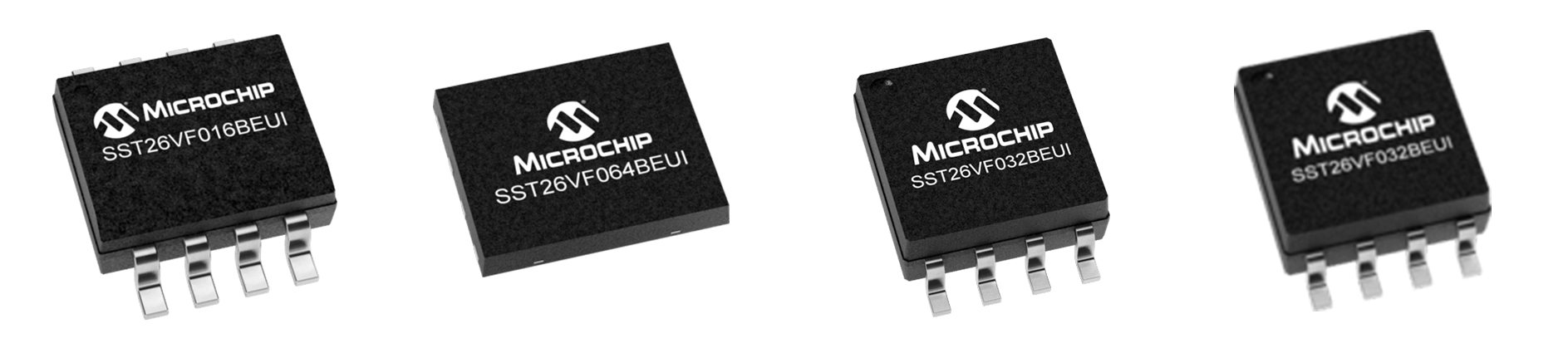
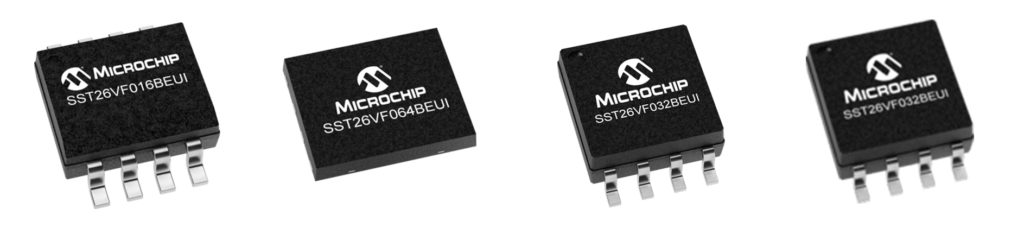
      The SST26VF064BEUI, SST26VF032BEUI and SST26VF016BEUI are low-power, high-performance devices in a low pin-count package, featuring a six-wire, 4-bit I/O interface.


      These are available in 8-pin SOIC and 8-contact WSON packages, occupying less board space and lowering overall system costs. Microchip’s pre-programmed SST26VF family of devices are flexible MAC address chips that come with uniquely pre-programmed EUI- 48 addresses and compatible EUI-64 addresses. MAC address options are available at Flash densities of 16 megabit (Mb), 32Mb and 64Mb. They feature rich SQI flash, with flexible write-protected functionality to eliminate accidental over-writing or erasure. Both the EUI-48 and EUI-64 node addresses consist of an Organizational Unique Identifier (OUI) and an Extension Identifier (EI). While the OUI is purchased from the IEEE by individual companies, the EI is assigned and managed through each company by building a unique EI into every product, thereby ensuring a globally unique Extended Unique Identifier (EUI) node address for every device used or shipped.


      Overall, with the Microchip SST26VF Serial Quad I/O™ (SQI™) 3V Flash family:

      • You don’t need to buy MAC addresses
      • You don’t have to manage MAC addresses
      • You don’t need to program MAC addresses

      For more information, please call +44 (0)1527 830800 or use the contact form below.

        Microchip’s High-Voltage, Reliable SiC MOSFETs

        There’s a growing demand for Silicon Carbide (SiC) power products that improve system efficiency, robustness and power density in Automotive, Industrial and Mil/Aero applications. Microchip Technology Inc’s Microsemi subsidiary has announced the release of the SiC power device family, offering proven ruggedness and the performance benefits of wide-bandgap technology. The new SiC power device family complements Microchip’s microcontroller (MCUs) and analogue solutions, which is part of the growing family of SiC products within the Automotive industry, meeting the stringent requirements of Electric Vehicles (EVs) and other high-power applications in different markets.


        Introducing the 700 V SiC MOSFETs and 700 V and 1200 V SiC Schottky Barrier Diodes (SBDs) to join Microchip’s current portfolio of SiC power modules, there are over 35 discrete products that offers outstanding ruggedness proven through rigorous testing, that are available in volume along with comprehensive development services, tools and reference designs. Microchip offers a broad family of SiC die, discrete and power modules in a range of voltage, current rating and package types.
        Rich Simocic, the Senior Vice President of Microchip’s Discrete and Power Management unit said “SiC technology’s accelerated evolution and adoption has begun, and Microchip offers both a long heritage in this market and the ongoing commitment to playing a leadership role in ensuring that global supply continues to meet growing demand for these products… We are building out our portfolio with reliable products that are backed by the strong support infrastructure and supply chain that our customers need to execute and scale their development programs.”


        Microchip’s SiC MOSFETs and SBDs offers more efficient switching at higher frequencies and with the ability to withstand ruggedness levels which are considered critical for promoting long-term reliability; these perform ~20% better than other SiC diodes in Unclamped Inductive Switching (UIS) ruggedness tests that measures performance of the devices that can withstand degradation or premature failure under avalanche conditions – Microchip’s SiC MOSFETs outperform competition products in the marketplace by demonstrating excellent gate oxide shielding and channel integrity with little lifetime degradation in parameters, even after 100,000 cycles of Repetitive UIS (RUIS) testing. These products are suitable for the growing number of EV systems including external charging stations, onboard chargers, DC-DC converters and powertrain/traction control solutions.


        For more information, please contact Marketing@sssltd.com or use the contact form below.

          Making the Connection in Transportation with Digi International


          In our modern day public transport, whether by rail or road, sophisticated cellular connectivitiy has rapidly become an essential requirement in creating a safe, comfortable and timely travel experience for passengers of trains, buses and other passenger vehicles.

          Digi WR54 and Digi WR64 offer versatile on-board public and private connectivity, including all-in-one mobile communications solution for secure, high-speed cellular connectivity between vehicles and a central operations centre.

          Download Digi International’s latest Rail whitepaper below.

          Quectel’s Broad 5G Module Portfolio

          In the modern age of 5G, Quectel has built up a broad portfolio to support different verticals of IoT customers as the variety of markets require different data rates, interface, operating environments and costs.

          For example, Quectel has rolled out Industrial-grade 5G modules, including standard 5G NR modules RG500Q/RG510Q in lGA form factor and RM500Q/RM510Q in M.2 form factor, which are suitable for fixed wireless access, laptop, public security etc. However these aren’t suitable for Tier 1 and automaker customers, which means that Quectel are developing Automotive-grade “5G NR + C-V2X” module AG550Q and more for the Automotive industry.

          Doron Zhang, Senior Vice President of Quectel, said “5G will bring a ‘sea change’ to the whole society. I believe Quectel’s rich products and robust supply chain will meet the diversified requirements of vertical segments. Also, Quectel is always willing to provide customers support ranging from initial design concept to final product to help them simply design and accelerate the time-to-market.”

          Contact websales@sssltd.com to find out more about 5G modules or use the form below.

            The New Digi AnywhereUSB Plus Family

            Introducing the new Digi AnywhereUSB Plus, which allows you to connect peripheral devices anywhere on a Local Area Network (LAN) remotely – without the need of a locally-attached host computer.

            AnywhereUSB Plus allows you to quickly deploy, configure, virtualise, manage, test and even charge smart deivces such as phones, tablets, scanners, sensors and/or other programmable IoT devices remotely. This new product from Digi offer Gigabit and higher speed network connectivity for USB 3.1 Gen 1 devices, stronger security with a unique encryption, compatibility with Digi Remote Manager as well as up to 24 USB ports with the ability to charge all devices simultaneously.

            This is a secure, cost-effective way to verify that your IoT infrastructure is connected and centrally managed.

            The Digi AnywhereUSB Plus was designed for – but not limited to – markets such as Production, Medical, Point of Sale (POS) and Data Centres.

            Features:

            • 2, 8, or 24 USB port 3.1 Gen 1 ports
            • Gigabit Ethernet & higher speed network connectivity
            • Port power for charging smart devices
            • Digi Remote Manager
            • TrustFence® Security; unique encryption
            Watch these new videos from Digi to learn more about implementation of AnywhereUSB:

            Installing Digi AnywhereUSB Manager

            Establishing Groups with Digi AnywhereUSB Plus

            Group Assignments for Digi AnywhereUSB Plus

            Read this case study to learn how Digi AnywhereUSB Plus overcomes subsea communication challenges:

            Contact websales@sssltd.com to find out more or use the contact form below.